

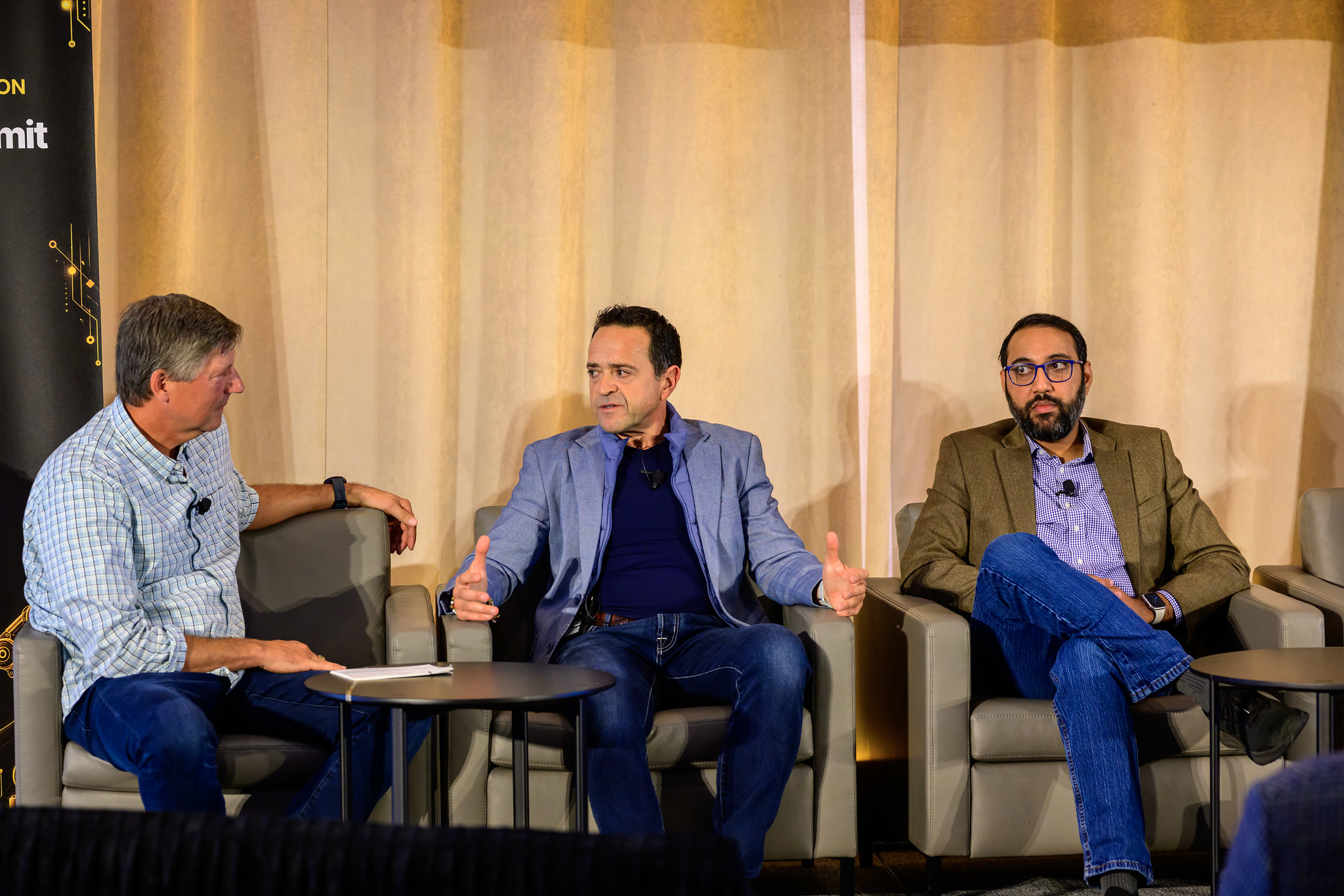
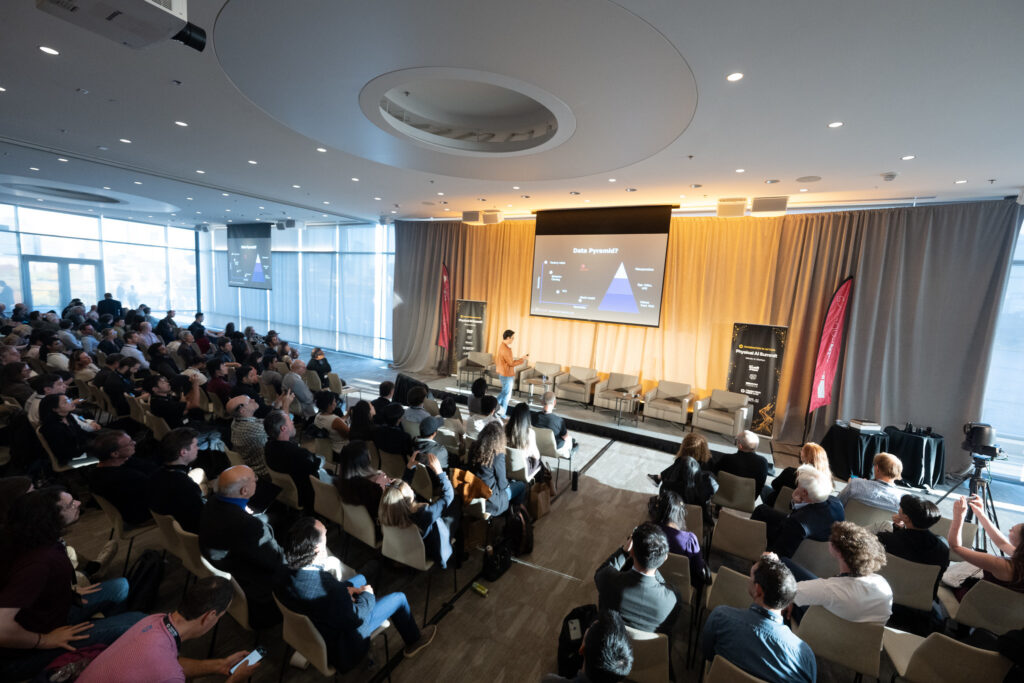
Friday, October 30, top floor of the MIT Samberg Center, with the Charles River outside the windows. The occasion was the first Imagination in Action Physical AI Summit, “Minds in Motion,” organized by John Werner with MassRobotics, MIT CSAIL and TEDxMIT.
The numbers alone tell you something has changed: about 200 speakers, 1,500 attendees and 25 live demos in one day, all about AI that has to work in the physical world. Fifteen years ago a room like that would have fit around one table, and half of us would have been from the same lab. Time have changed!!
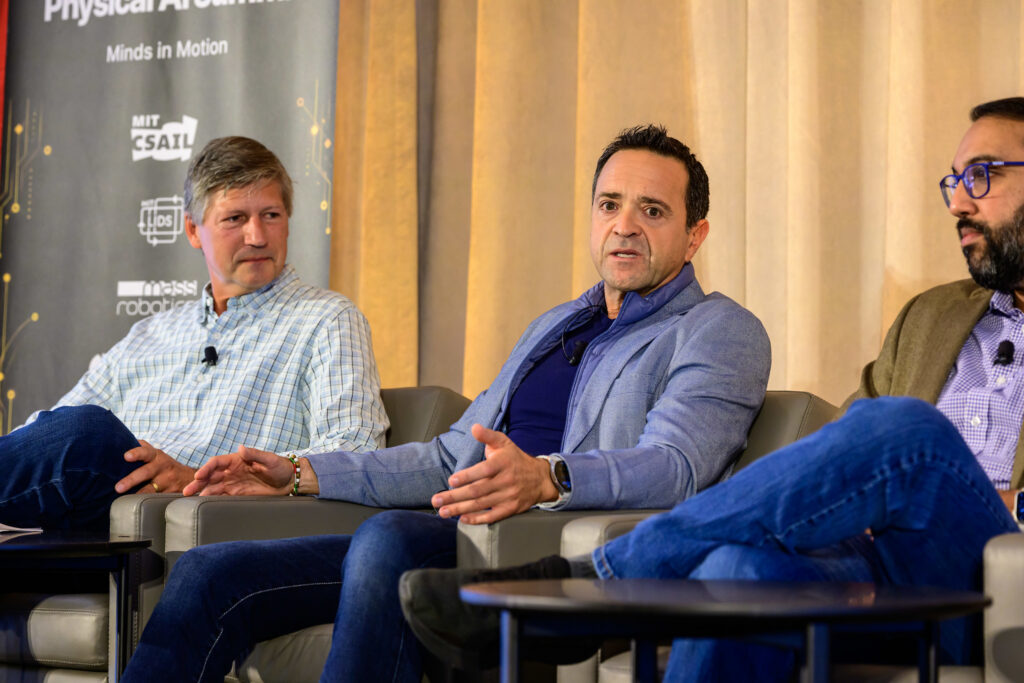
The Physical AI stack
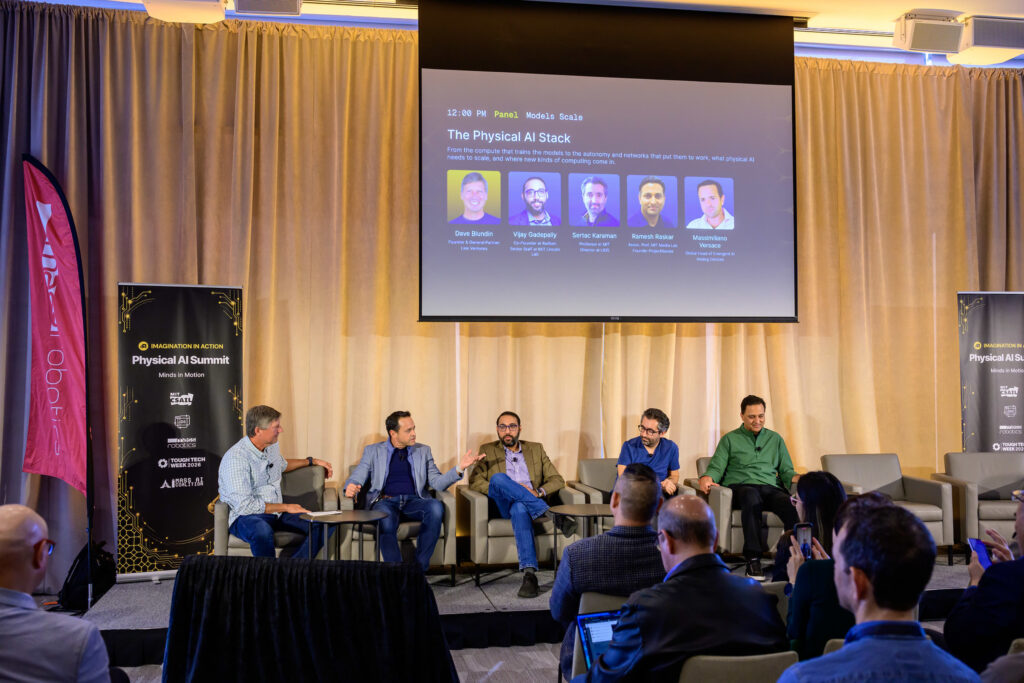
I spoke at noon on “The Physical AI Stack,” a panel moderated by Dave Blundin with Sertac Karaman and Ramesh Raskar of MIT and Vijay Gadepally of MIT Lincoln Laboratory. The question on the table: what does it actually take, from the sensor to the chip to the motor, to get intelligence out of a data center and into a machine that moves?
My answer, which will not surprise anyone who has read this site: building the brain is the hard part, not the body.
Humanoids are a good example. Give a robot a human shape, choreograph a few human-like moves, and people start assuming it can think like one of us. It can’t, at least not yet. The real challenge is AI that runs continuously, in real time, adapting and learning on the job, inside a body with a battery. That is a completely different ball game from pulling a GPU out of a data center rack, bolting it into a mobile robot and running the same algorithms. Physics has a way of shortening that discussion. This is why we are paying so much attention to AI when it comes to Physical Intelligence.. it’s much about the brain and its co-design with the body!
20 hours instead of 20 minutes
Efficiency came up from every direction. Sertac made the point that most of today’s AI runs in data centers, and that a lot of everyday AI could soon run on laptops and phones instead. Ramesh talked about perception, planning and mapping as separate pieces that negotiate with each other, which is, by the way, roughly how a brain works.
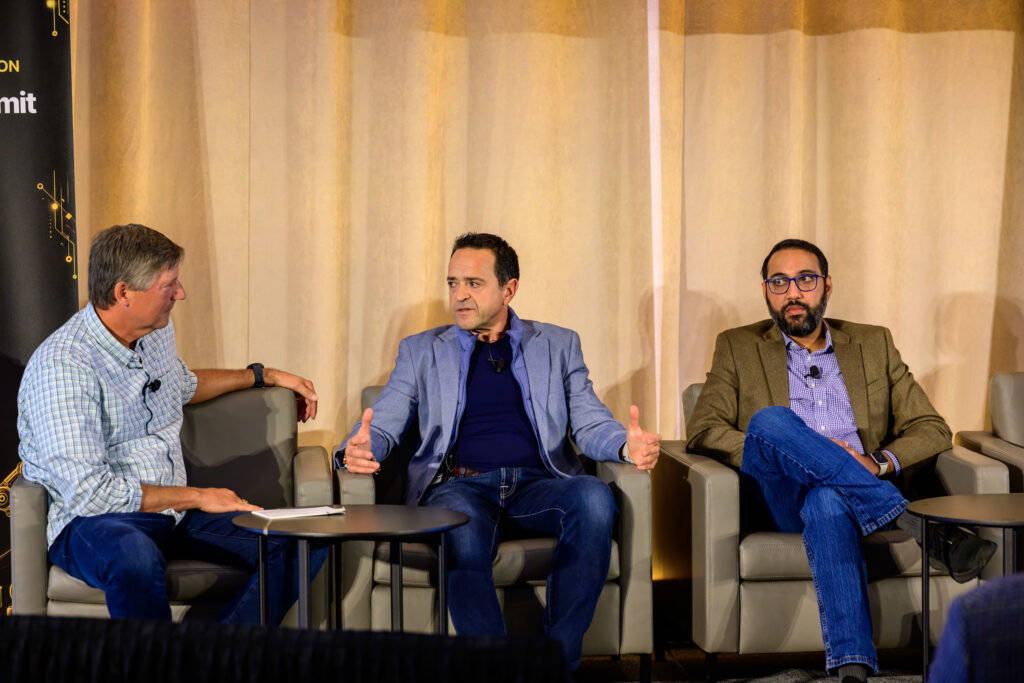
My contribution was on brain-inspired, neuromorphic computing. Biology gets remarkable behavior out of a tiny power budget. Chips and algorithms designed along the same lines could let a robot run for 20 hours instead of 20 minutes. Kenneth Huynh picked that line out in his write-up of the panel, and it is the problem I have been chasing since my days in the Boston University Neuromorphics Lab.
What I took home
Three things. First, the stack is the product: sensing, compute, models and control have to be designed together, and the weakest layer decides how far the robot gets. Second, new algorithms and new AI compute are both needed. Faster versions of what we have will not close the gap on their own. Third, the room was full of people who build real things. That is the best sign I have seen in years that Physical AI is moving from slides to machines.
It was also great to catch up with my old friend Jon Chesto of The Boston Globe.
Thanks to John Werner and the whole Imagination in Action team, to Dave for running a sharp panel, and to Sertac, Ramesh and Vijay for a conversation that could easily have gone another hour. Much of this technology was invented a short walk from where we sat. Great to see it come home.


Max VersacemaxversaceEdit Profile
I keep everything on Physical AI in one place, from papers and patents to 15 years of press: Physical AI.
More on this: What happens when AI gets a body? · Edge AI is not a place, it’s a constraint · The next AI revolution will be hardware + software