
By Massimiliano “Max” Versace
Computational neuroscientist, AI executive, inventor, and entrepreneur.
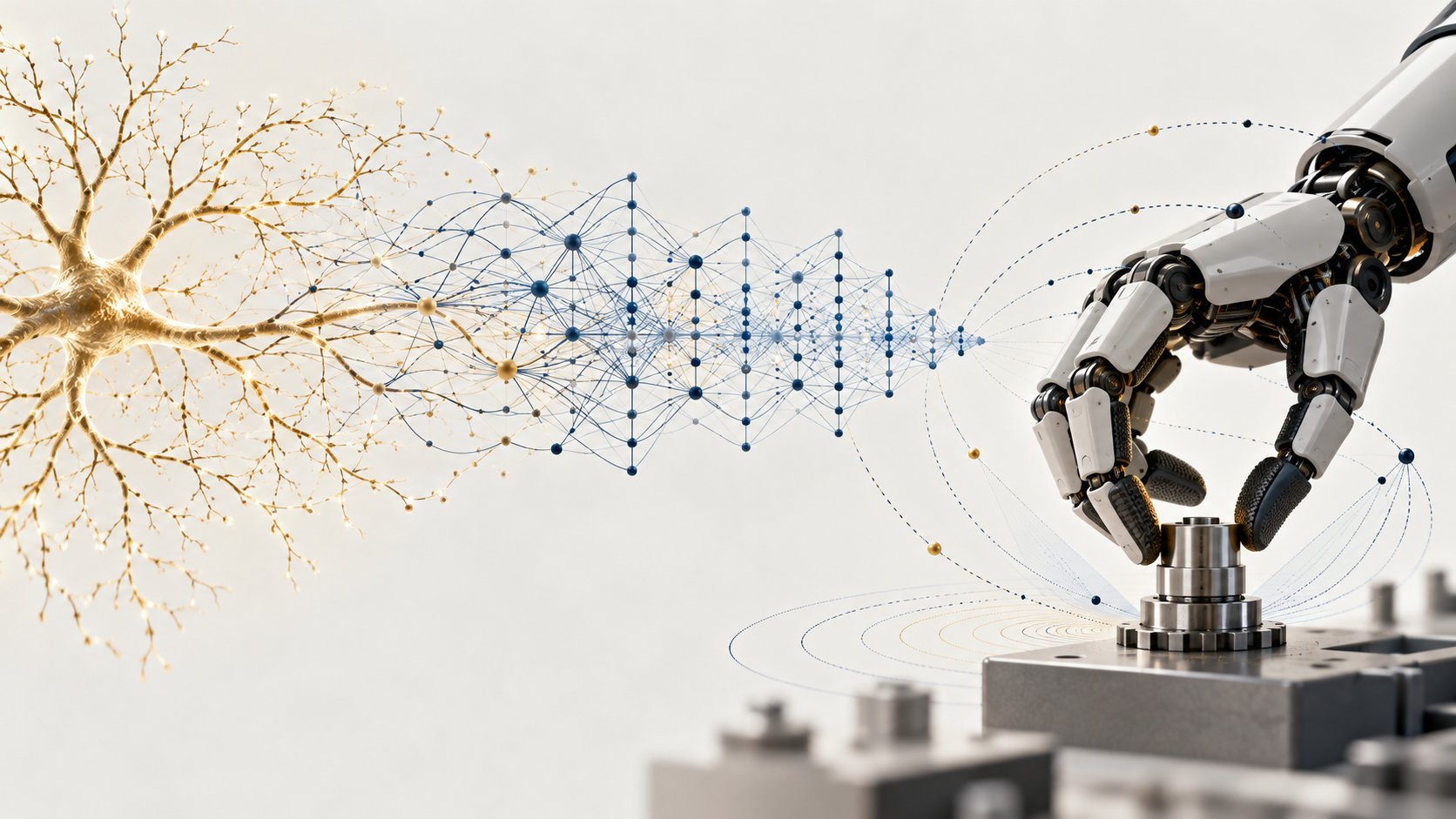
Ask a robot to pick up an espresso cup and a surprising amount of science turns up. Vision has to locate it. Touch has to detect contact. Motors have to apply enough force to hold it, preferably without turning it into a ceramics experiment. Somewhere in that process, a computer has to decide what to do next, before the coffee ends up on the floor.
Physical AI is artificial intelligence that uses sensory information to perceive, predict, learn, and guide action in the physical world. It connects neural computation with sensing, memory, planning, control, and the hardware that makes behavior possible. Robotics is its most visible expression, but the same questions arise in industrial inspection, autonomous vehicles, medical devices, and intelligent sensors.
This page brings together the ideas, research, patents, articles, and outside reporting behind my work in this field. My colleagues and I have approached these questions through computational neuroscience, DARPA-supported neuromorphic research, NASA-supported robotics, and the decidedly educational experience of turning research into products. The terminology has changed over the years. The requirement that the machine actually work has been remarkably consistent.
Recognition and outside reporting · Definitions · The Physical AI stack · Neuroscience and neuromorphic computing · Sim2Real · Edge AI and continual learning · Deployment · Start reading · Publication archive · Patents · Questions
Recognition and reporting beyond this website
The most useful account of a career is one other people can check. These sources document the work, the teams behind it, and how it moved beyond the laboratory.
- Space Technology Hall of Fame, 2026. The Space Foundation inducted the AI brain our team built, recognizing our company and NASA Langley Research Center, with individual commendations for Heather Ames, Massimiliano Versace, Anatoli Gorchet, and Mark Motter. Its announcement describes simulation-based terrain learning, transfer to physical robots, and subsequent commercialization. It reports deployment in approximately 80 million systems. That figure covers the technology across applications; it does not mean 80 million autonomous robots.
- NASA technology transfer. NASA’s 2018 Spinoff account traces the work from DARPA SyNAPSE to NASA-supported autonomous systems. NASA’s 2024 account follows the technology into industrial visual inspection. These were research and technology-transfer programs, not a claim that our software flew on a Mars rover.
- Netexplo recognition, 2018. UNESCO’s account of the Netexplo Innovation Forum lists our collaboration with Air Shepherd among the award-winning applications, for work on detecting poaching. This recognition concerns the application and the collaborating organizations.
- Independent technical and business reporting. IEEE Spectrum examined the transition from NASA research to onboard robot intelligence. TechCrunch, VentureBeat, and The Boston Globe covered the company’s development and financing. The archive below includes the original articles.
- Research and professional leadership. Boston University documented the Neuromorphics Lab and my role as its director. Today, the EDGE AI FOUNDATION lists me as a Board Advisor; its partnership announcement identifies my role as Vice President of Emergent AI at a global semiconductor company.
These are shared achievements. They required researchers, engineers, partners, customers, and colleagues willing to stay with a problem after its first impressive demonstration.
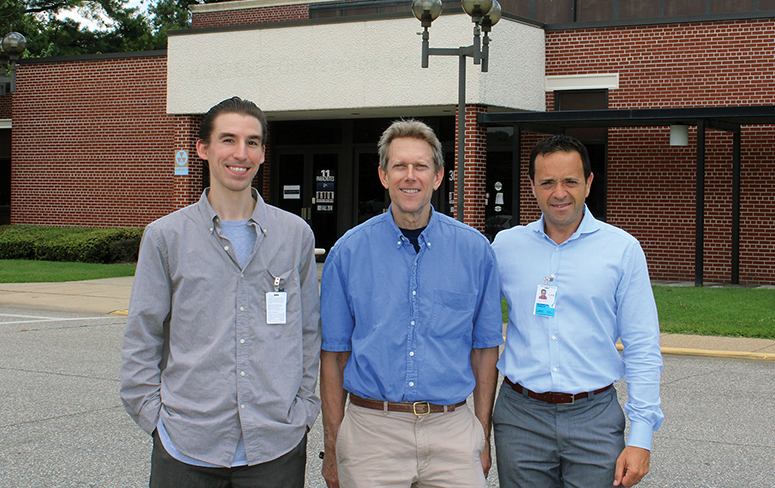
Further recognition of the teams and technology
- CB Insights AI 100, 2018. The company I co-founded appears in the CB Insights 2018 AI 100 report.
- AUVSI XCELLENCE, 2018. Aviation Today’s report lists our Brains For Bots SDK in first place for Inspection, Mapping and Surveying.
- Draper Venture Network, 2016. Boston University’s Photonics Center recorded the Most Innovative Company award.
- Edison Awards, 2018. Our company’s announcement records Gold in Social Innovation for the Brains For Bots SDK. This source is a company press release.
- TechConnect Defense Innovation. Our company’s 2017 year-end account records a Defense Innovation Summit TechConnect Defense Innovation Award.
These recognitions belong to the teams, companies, and technologies named in their original records. They are part of the history of my work, with credit shared accordingly.
Physical AI, embodied intelligence, and robotics: what do the terms mean?
I use Physical AI to describe intelligence that has to account for the consequences of operating in the physical world. A useful definition needs to tell an engineer what must be built and measured. Merely putting a language model inside a robot does not settle the matter.
| Term | What it describes | Engineering question |
|---|---|---|
| Physical AI | AI used to interpret physical conditions and guide decisions or actions in physical systems. | Does the complete system achieve its task under real conditions? |
| Physical intelligence | The ability to use sensing, prediction, and action to handle the demands of a physical environment. | Does the intelligence account for the body, its sensors, and the consequences of acting? |
| Embodied intelligence | Intelligence shaped by interaction among an agent, its body, and its environment. | What can the agent learn through its own actions and their sensory consequences? |
| Robotics | The design and operation of machines that sense and act. | How do mechanics, sensing, computation, and control produce dependable behavior? |
| Computational neuroscience | Mathematical and computational models used to explain nervous-system function and behavior. | Which mechanisms explain learning, perception, attention, and action? |
| Neuromorphic computing | Computing architectures that draw on nervous-system organization or dynamics, often using distributed state and event-driven processing. | Which biological principles improve the implementation of this workload? |
| Sim2Real | Transferring models, representations, or behavior developed in simulation to physical hardware. | Which assumptions survive the move to real sensors, materials, and actuators? |
| Edge AI | AI computation close to the source of data or the point of action. | Can it meet the local limits on latency, power, memory, connectivity, and cost? |
Physical intelligence: what the machine has to understand
Physical intelligence is a useful way to describe the capability we are asking for. Physical AI describes the artificial systems we build to pursue it. The two expressions often overlap in robotics, but a useful discussion has to get past the terminology. The machine needs information about its surroundings, a way to anticipate consequences, and feedback that tells it whether an action worked.
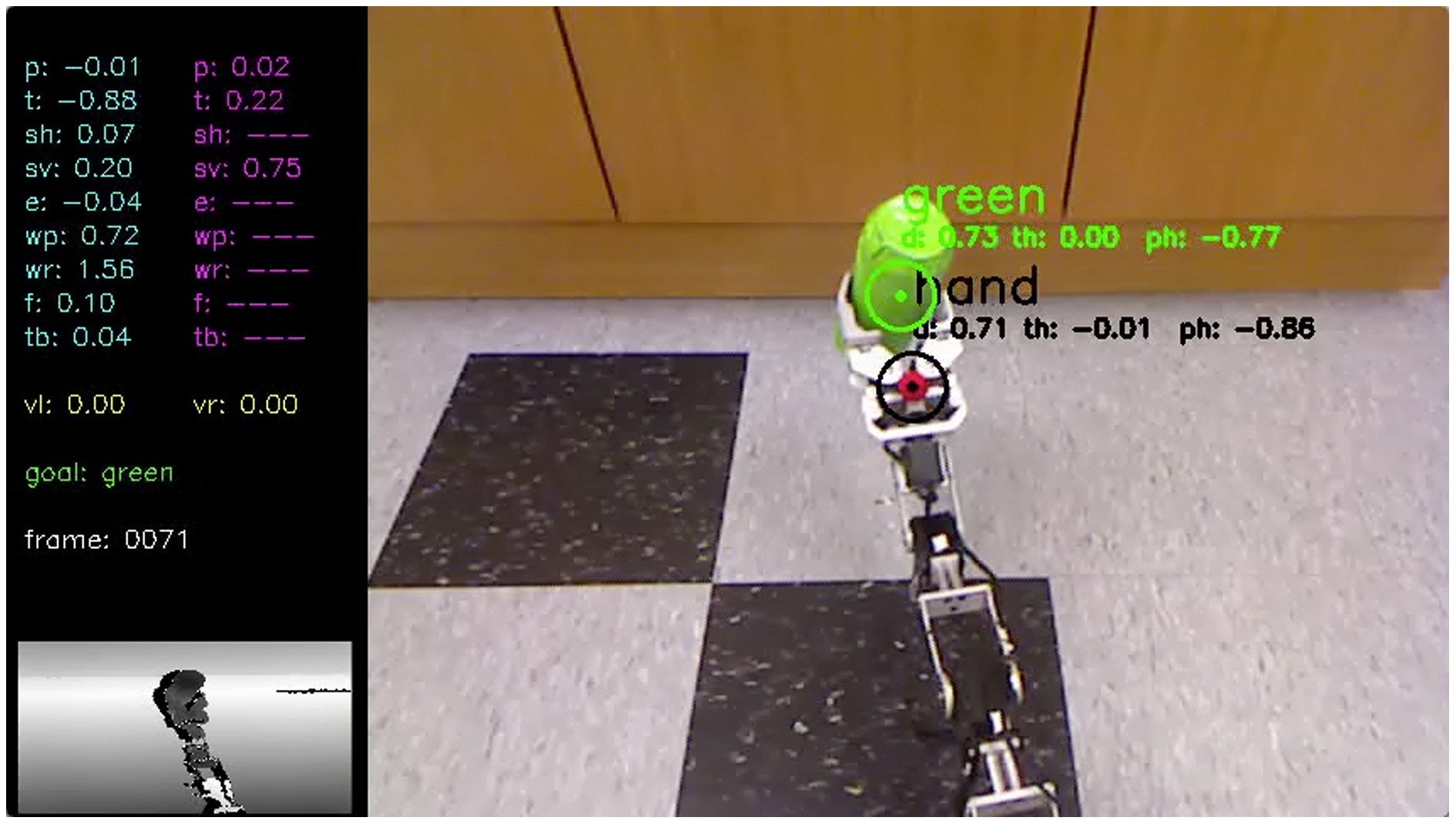
Picking up a cup makes the distinction concrete. Recognizing the cup is one task. Estimating where to grasp it, responding when it slips, and adjusting force without breaking it require sensing, prediction, and control to work together. This is where computational neuroscience, embodied intelligence, and engineering meet.
These areas overlap, but they answer different questions. An inspection camera can use Edge AI without controlling a robot. A robot can combine local control with remote planning. A brain-inspired algorithm can run on a conventional processor. Choosing an architecture requires more precision than choosing a label.
The Physical AI stack: from a measurement to a useful action
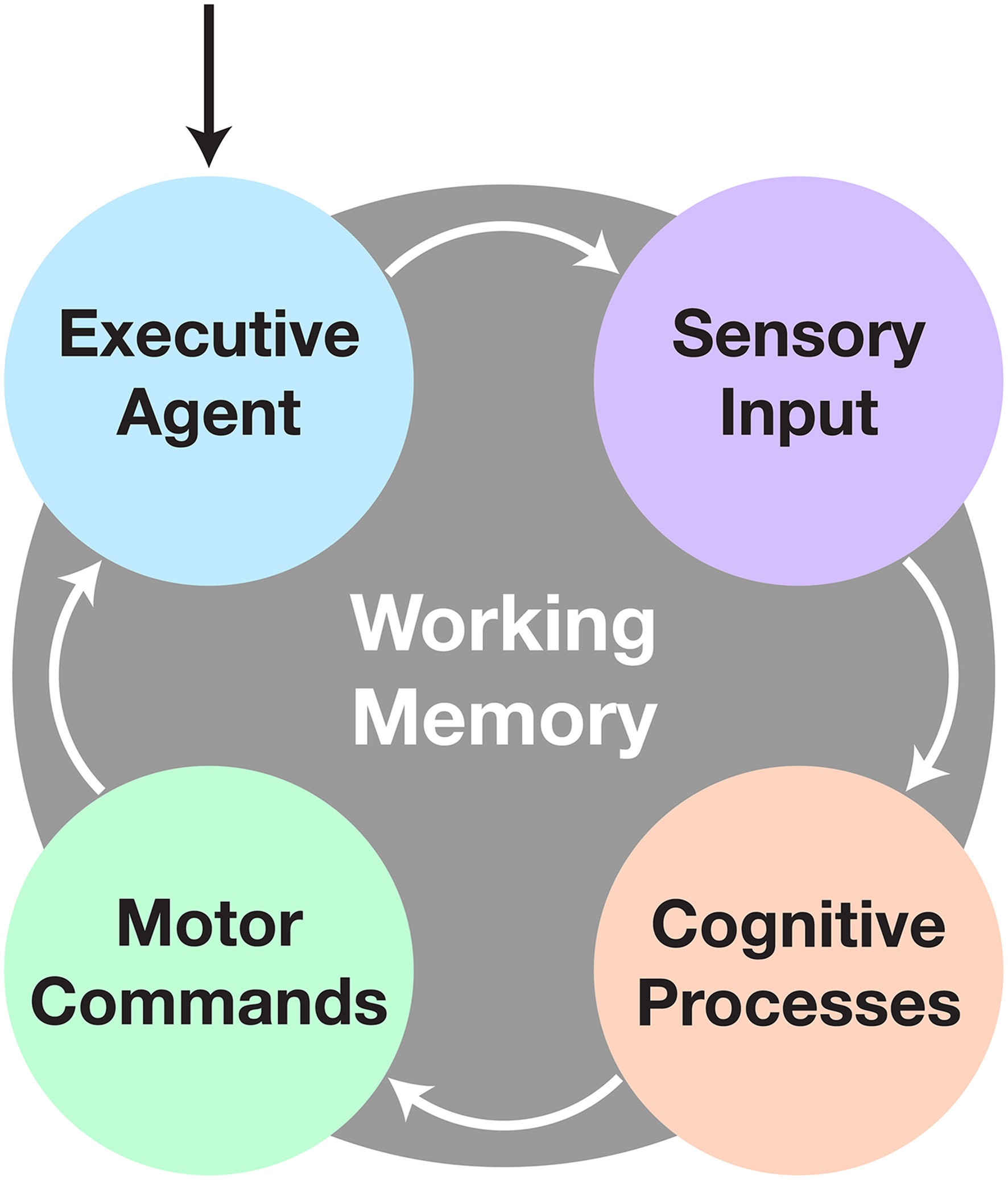
The stack I care about begins before the neural network. A sensor measures something through noise, limited bandwidth, calibration error, and a particular point of view. Whatever the model does next depends on the information that survives that process.
- Sensing and signal processing. Cameras, microphones, tactile sensors, force sensors, encoders, and inertial sensors provide different observations. Sampling, synchronization, filtering, and calibration determine whether those observations can usefully be combined.
- Perception and state estimation. The system estimates what is present, where it is, how it is moving, and how uncertain those estimates are. A classification score alone is not a complete description of the world.
- Memory and prediction. An internal model retains useful history and predicts what may happen. For a robot inserting a connector, the relevant prediction may be contact and resistance, rather than every pixel in the next camera frame.
- Planning and action selection. The system chooses an action that advances the task within its operating limits. Modern vision-language-action models can connect visual observations and instructions to robot actions; RT-2 is one published example. Its reported generalization results should not be mistaken for a guarantee across arbitrary tasks and machines.
- Control and actuation. Commands become forces and motion. Feedback must correct errors on the timescale of the task. A slower planning process can coexist with a much faster local control loop.
- Learning and supervision. Experience can improve the system, provided changes are evaluated, recorded, and constrained. Failure detection, human intervention, and recovery belong in the design.
Consider timing. End-to-end delay includes sensing, transport, computation, scheduling, and actuation. A fast neural network can still sit inside a slow machine. The same applies to energy: measuring the accelerator alone leaves out sensors, memory traffic, communication, and the motors doing the work.
The practical test is simple to state and difficult to pass: can the machine complete the task repeatedly, within the agreed time and energy budgets, including the awkward cases?
What computational neuroscience contributes
Biology remains an excellent source of uncomfortable questions for computer engineers. Animals combine perception, memory, motivation, and movement while continually encountering things they have never seen before. They do this with hardware that was not designed around a benchmark leaderboard.
My work with Stephen Grossberg on spikes, synchrony, and attentive learning in thalamocortical circuits examined how neural dynamics support attention and learning. Work with Jasmin Léveillé and Stephen on spiking dynamics and perceptual grouping considered how interactions across a network resolve ambiguous visual information. These are computational models of particular mechanisms, not complete explanations of intelligence.
For engineering, the attraction is in the questions they make us ask. How does feedback alter perception? Which information deserves attention? How can a system learn without erasing useful knowledge? What should happen when its expectations are wrong?
Neuromorphic computing: the physical implementation matters
At Boston University, our colleagues worked with Hewlett-Packard researchers on models and computing architectures in the DARPA SyNAPSE program. Ben Chandler and I described the effort in MoNETA: A Mind Made from Memristors. The collaborative paper From Synapses to Circuitry examined memristive memory and its relationship to computation.
Moving data has a cost. Keeping state closer to computation, communicating only useful changes, and exploiting sparse activity can matter as much as counting arithmetic operations. Whether a neuromorphic implementation wins depends on the workload, precision, hardware, and supporting software. A spike is not automatically an energy saving; the complete implementation has to earn that claim.
My perspective on that relationship is developed in The next AI revolution will be hardware + software. The aim is to learn from biology while remaining very practical about the machine being built.
Sim2Real: a virtual world is a useful teacher, and an imperfect one
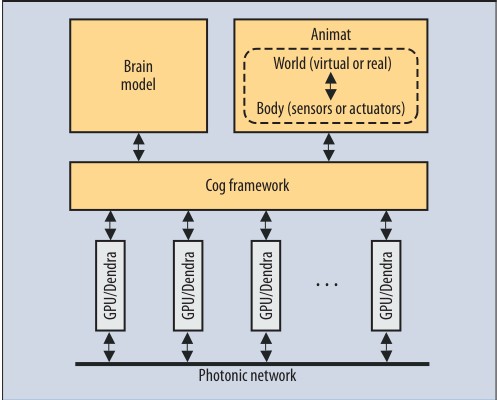
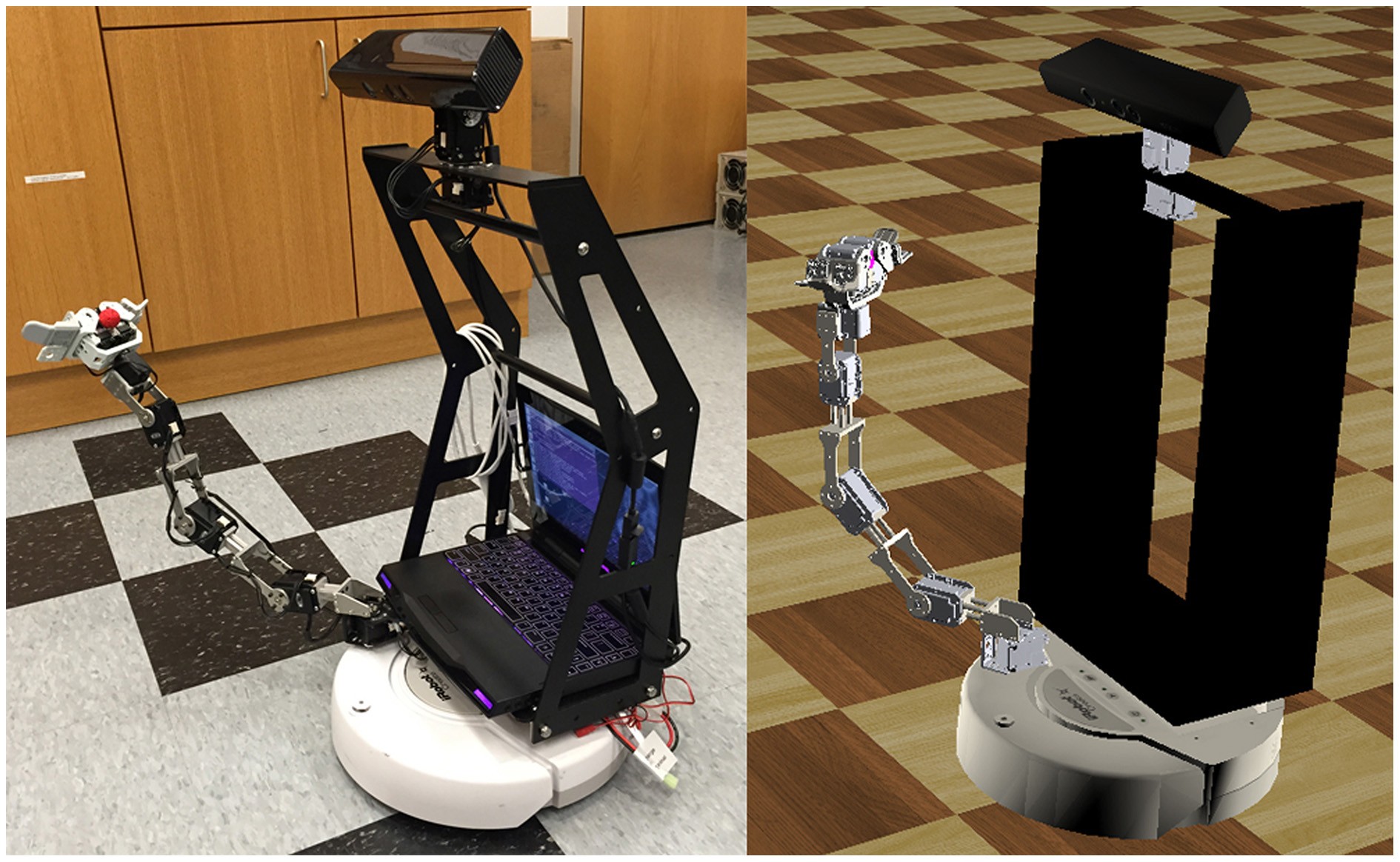
Our involvement in DARPA SyNAPSE began in early 2009, as NASA’s history records. By 2011, an NSF-provided account by Aisha Sohail described our lab creating artificial brains in virtual environments before deploying them in robots. The Animat, published in 2012, documents the broader collaboration. Those dates establish the history of our work; they are not a claim that our team invented simulation-to-real transfer.
Simulation gives a team repeatable experiments, faster exploration, and access to conditions that would be expensive or dangerous to create physically. The trouble starts when the robot learns a simulator’s convenient mistakes. Friction, backlash, compliance, sensor noise, lighting, contact, and communication delays all have ways of becoming important at precisely the wrong moment.
Domain randomization deliberately varies aspects of the simulated environment so a policy or perception model encounters a range of conditions. System identification, real-world calibration, and carefully designed adaptation can also reduce the gap. None removes the need to test on hardware.
World models add another tool: learned representations of how an environment evolves, potentially conditioned on actions. Their usefulness depends on the accuracy of the consequences that matter for the task. A plausible video of a successful grasp is not evidence that the corresponding forces are possible.
A sound evaluation holds out objects and conditions, measures performance on the physical machine, and records failures and human interventions. It also asks whether success survives changes in payload, wear, lighting, and sensor calibration. Reality is quite good at finding the variable we forgot.
Edge AI and continual learning
For a physical machine, compute location is a consequence of its constraints. Some decisions can tolerate a network round trip. Others cannot. This is the argument behind Edge AI is not a place, it’s a constraint.
There is another distinction that matters: edge inference runs a trained model locally; edge learning changes what the system knows using new experience. A device can do the first without doing the second. Continual learning adds the problem of acquiring new knowledge while retaining useful previous knowledge, within bounded resources.
Our work on Lifelong-DNN grew from these practical concerns. The Space Foundation’s account describes learning on edge devices without relying on cloud connectivity. The linked patent records and articles below provide more detail about particular methods. Different forms of incremental learning solve different problems; learning new visual categories is not the same achievement as learning an unrestricted new robot skill.
Adaptation also creates an obligation. A system that changes after deployment must be monitored for regressions, unexpected behavior, and forgetting. Data quality, validation, versioning, and rollback are part of learning in a product. An industrial customer should not discover that yesterday’s improvement broke today’s production run.
From a working model to a machine people can depend on
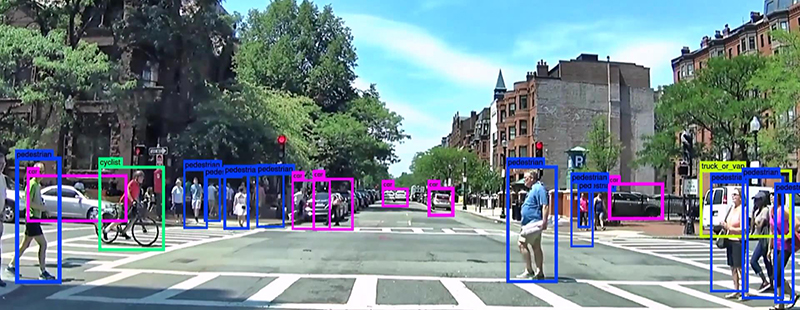
Leading an AI company taught me that the algorithm is only one part of what a customer buys. The rest includes installation, integration, usability, support, and an answer to the reasonable question: what happens when it fails?
| Application | What must work | What to measure |
|---|---|---|
| Industrial visual inspection | Detection under production variation, with useful operator feedback. | Missed defects, false rejects, inspection time, changeover effort, and downtime. |
| Mobile robots and drones | Perception and navigation despite changing conditions and limited connectivity. | Task completion, interventions, recovery, energy use, and performance inside the defined operating area. |
| Dexterous manipulation | Vision, touch, force, and motion working together through contact. | Successful grasps, slip, damage, cycle time, and robustness across materials and objects. |
| Intelligent sensors | Useful local interpretation of noisy physical signals. | Detection quality, end-to-end latency, energy, memory, and calibration stability. |
These are evaluation questions, not claims that one architecture solves all four categories. Define the job, specify the conditions, measure the complete workflow, and count the human help honestly. A narrow application that works reliably can be an excellent business. A machine with an impressive list of possible applications can still have no customer.
The Center for Data Innovation interview discusses that transition from research to industrial AI. NASA’s account of factory inspection documents one concrete result. The scientific, technical, and commercial decisions have to inform one another from the beginning.

Start reading: Physical AI in practice
- Physical AI in Seven Lessons I Learned the Hard Way — Medium.
- Physical AI Explained: What 15 Years of Building Robot Brains Taught Me — lessons from simulation, robotics, deployment, and company building.
- From Computational Neuroscience to Physical AI — the research and career connections.
- What happens when AI gets a Body? — embodied intelligence and the demands of robotics.
- Edge AI is not a place, it’s a constraint — sensing, timing, and local computation.
- The next AI revolution will be hardware + software — neural architectures and the machines that execute them.
- What happens when AI never stops learning? — distinctions among training, transfer learning, and continual learning.
- Solving AI’s energy challenge: learning at the compute Edge — adaptation under resource constraints.
- It from Bit: how AI is shaping our physical world — an earlier discussion of AI’s physical consequences.
Publication archive: research, outside reporting, articles, and talks
This archive follows more than fifteen years of work, with a few earlier papers that help explain its foundations. Reporting by others, institutional accounts, my own articles, collaborative papers, and recordings are identified separately. Historical affiliations describe the role held at publication. Some publishers require a subscription. An older prediction is part of the historical record, not a statement of what has since been proved.
Independent reporting and NASA / NSF accounts
- IEEE Spectrum — Deep Learning AI for NASA Powers Earth Robots
- National Science Foundation account — Transforming robotics with biologically inspired learning models
- NASA Spinoff — Planet-Navigating AI “Brain” Helps Drones and Cars Avoid Collisions
- NASA Spinoff — From Mars Rovers to Factory Assembly Lines
- NASA — A “Brain” for Cars, Tested for Mars
- NASA — From Mars Rovers to Factory Assembly Lines
- VentureBeat — Financing the development of AI for autonomous machines, 2017
- The Boston Globe — Financing AI software development, 2017
- The Boston Globe — Mobile AI applications, 2017
- Fortune — AI entrepreneurship and financing, 2017
- TechCrunch — Bringing machine learning to the edge, 2017
- Il Sole 24 Ore — Il ratto nel robot, 2011
- Inc. — This Artificial Intelligence Expert Breaks Down Your Burning Questions
Talks and video recordings
- TEDxFulbright — Neuromorphics: Machines to Life
- NVIDIA GTC Europe — Brain-in-a-Box
- MIT Technology Review Future Compute — How AI Is Changing the Way We Work
- MIT Future Compute — accompanying retrospective
- Fulbright Association — Humanizing AI: From Myth to Reality
- Fulbright Association — conference speaker listing
- AI, Immigration, and Entrepreneurship — video interview
- AI, Immigration, and Entrepreneurship — accompanying account
- RoboBusiness — How to Train Your Robot’s AI
- TEDxCortina — Unlocking the AI Mirror: What Makes Us Unique?
- Robotics Summit & Expo — speaker profile
- Minds in Motion — The Physical AI Stack, October 2026
Interviews and podcasts
- The VentureFizz Podcast — Building and leading an AI company
- Unite.AI — Neuroscience, continual learning, and entrepreneurship
- Tech Talks Daily — AI in Manufacturing: A Second Set of Eyes
- Association for Advancing Automation — Utilizing Vision AI in Manufacturing
- Center for Data Innovation — 5 Q’s With Max Versace
- Immigrant Nation — Replicating the Human Brain: The Future of AI
- Immigrant Nation Podcast — accompanying post
- The Early Stage — Building Brains for Bots
Scientific research and technical writing
- Spikes, synchrony, and attentive learning by laminar thalamocortical circuits
- Brain Research paper — DOI
- MoNETA: A Mind Made from Memristors
- An Introduction to Silicon Brains: Dr. Massimiliano Versace
- From Synapses to Circuitry: Using Memristive Memory to Explore the Electronic Brain
- The Animat: New Frontiers in Whole Brain Modeling
- Does Artificial Intelligence Require Specialized Processors?
- The Next Frontier in AI: Nothing
Forbes Technology Council articles and contributions
My contributor articles and expert-panel contributions; these are distinct from independent reporting about my work.
- Mastering AI Integration in Manufacturing: Unmasking the Myths
- Software to Hardware: How to Shift to Building Physical Tech
- Manufacturing, Sustainability and Profitability: How AI Can Make Us Greener
- “I Doubt, Therefore I Am,” Said AI
- Why 2022 Will Be an AI-Powered Renaissance
- How AI and Automation Can Address America’s Broken Supply Chain
- From One of a Million to One in a Million: The Path to Customization Passes Through AI and Automation
- How Manufacturers Have Turned the Table on Automation
- From Digital to Physical: The Ultimate Challenge for AI
- Why “Explainability” Is the Next Step for AI in Manufacturing
- Rebounding From the Pandemic: What Our Past Teaches Us About the Future
- The Coming of Age of Industry 4.0 in a Post-Pandemic World
- From Computer Vision to Deep Learning: How AI Is Augmenting Manufacturing
- 2020 and the Dawn of AI Learning at the Edge
- 2020 AI Predictions: What We Got Right in 2019 and What’s in Store for 2020
- The World Needs WordPress for AI
- The Next-Generation AI Brain: How AI Is Becoming More Human
- If You’re Worried About AI Taking Your Job, Consider This
Institutional profiles and current work
- Physical Intelligence and Emergent AI — semiconductor industry perspective
- EDGE AI FOUNDATION — Board of Directors and Advisors
- Boston University — Pushing the Boundaries of Artificial Intelligence
- Boston University — The Robot as Decider
- Space Foundation — March 2026 Space Technology Hall of Fame announcement
- EDGE AI FOUNDATION — Partnership supporting sensing and intelligent edge computing
- Industrial Ethernet Book — Looking Ahead to 2026: AI Predictions
Additional research records
- KInNeSS: A modular framework for computational neuroscience (2008)
- Running as fast as it can: How spiking dynamics form object groupings in the laminar circuits of visual cortex (2010)
- MoNETA and the virtual Morris water maze (2011 conference poster abstract)
More third-party coverage and recognition
- Space Technology Hall of Fame: our AI technology, 2026 induction record
- UNESCO: 2018 Netexplo award-winning applications, including our Air Shepherd collaboration
- Federico Guerrini, Forbes: reporting on our work on catastrophic forgetting (2017)
Medium and related publications: my writing
- Physical AI in Seven Lessons I Learned the Hard Way — Medium.
- When Is a New AI Architecture Really New?
- AI in 2024 Is Impressive. Yet Biological Intelligence Is Still Unmatched. Why?
- Why We Are Getting AI Explainability All Wrong
- AI, the Opacity Myth, and the Rise of Explainability
- Unveiling the Hidden Power of Nothing in AI
- I Doubt, Therefore I Am, Said AI
- Is Artificial Intelligence Accelerating the Universe’s Entropic Destiny?
- Mirror of Minds: AI’s Challenge to Human Essence
- Mirror, Mirror on the Wall, Who’s the Smartest of Them All?
- It from Bit: How AI Is Shaping Our Physical World (2020)
- From Computer Vision to Deep Learning: The AI Path to Innovation in Industrial Applications (2020)
- Navigating 2020: An AI Startup Story
- What If Humans Are Already Enslaved by Machines?
LinkedIn publications and posts
- Edge AI Is Not a Place. It’s a Constraint (2026)
- Learning to Predict the Things That Matter: From Its AI Ancestors to JEPA (2026)
- Tactile sensing and physical intelligence (LinkedIn post)
More writing: my Medium archive, LinkedIn, and the Forbes Technology Council contributor index. These indexes help track additions and changes to older publisher URLs.
Further reporting and research
- Associated Press, via Boston.com (2017): A decade since the Great Recession, thriving cities have left others behind. Reporting that includes my move from Italy and the company’s work in Boston.
- Engadget (2017): Drones and AI help stop poaching in Africa.
- Galbraith, Guenther and Versace (2015): A neural network-based exploratory learning and motor planning system for co-robots. Frontiers in Neurorobotics, 9:7.
- Versace, Kozma and Wunsch (2012): Adaptive Resonance Theory Design in Mixed Memristive-fuzzy Hardware. A contributed book chapter, rather than an edited book.
Patents: selected technical records
Patent records describe inventions and their claims. They are not independent benchmarks of a deployed system. The records below name me among the inventors; several reflect joint work. Grant and application numbers are distinguished, and current ownership or legal status should be checked in the record rather than inferred from this list.
- US8648867B2 — GPU accelerator, granted 2014.
- US9189828B2 — GPU accelerator, granted 2015; related patent family.
- US9626566B2 — Autonomous robotic control, granted 2017.
- US20170076194A1 — Hardware-agnostic brains for autonomous robots, published application, 2017.
- US20160198000A1 — Distributed runtime architecture, published application, 2016.
- US12288162B2 — Deep neural networks with on-device learning, online and offline, with and without supervision, granted 2025.
Questions about Physical AI
Is Physical AI the same as robotics?
Robotics is a major part of it. Physical AI also includes intelligence integrated into instruments, industrial equipment, vehicles, and other systems that sense and affect the physical world. The important question is how perception, decisions, and physical consequences are connected.
Does Physical AI require a large language model?
No. A language model can help interpret an instruction or plan a sequence, but a useful physical system may rely on smaller perception models, state estimation, conventional control, or combinations of these. Its suitability depends on measurable behavior in the intended environment.
Why does simulation not settle the problem?
A simulator is a model of the world. Errors in friction, contact, lighting, timing, or sensing can be enough to break a policy that looked reliable on screen. Sim2Real requires tests on hardware, measurements of the remaining gap, and operating limits.
Does neuromorphic computing mean copying a whole brain?
No. Biological principles can inform a circuit, learning rule, architecture, or sensing method without reproducing an entire nervous system. The engineering case rests on what those choices deliver for the task and its resource budget.
How does my NASA and DARPA work relate to today’s Physical AI?
It connects through a persistent problem: getting learning systems to perceive, adapt, and act under real constraints. The NASA accounts, university reporting, collaborative papers, and patent records above document parts of that history. They do not imply that every subsequent system uses the same architecture or that research intended for planetary navigation flew on a Mars rover.
About the author
I am Massimiliano “Max” Versace, a computational neuroscientist, inventor, and AI entrepreneur. My work spans university research, co-founding and leading an AI company, and leading Emergent AI at a global semiconductor company. The thread running through it is the relationship between intelligence and the physical machinery that makes it possible. For my background, see About Me and my executive profile. For interviews, research discussions, or speaking, contact me.